Why accessibility is so hard to get right — and what you can do about it
Two hours, live online, with a short break. Not a training session — a candid look at why accessibility keeps slipping on real projects, why organisations are slow to admit it, and what a single tester, designer or developer can actually do about it.
- 15:30–17:30 CET
- 06:30–08:30 PST
- 20:00–22:00 IST
- Where projects go wrong: accessibility left to the end, missing from the definition of done, design systems that copy one defect into every screen, and third-party components nobody owns.
- Why companies do not acknowledge it: no visible complaints, a green scanner score or an overlay mistaken for compliance, and no budget line until a complaint or a procurement form forces one.
- What you can do from your own seat: the arguments that land with managers, the cheap checks that catch most problems early, and how to get accessibility into tickets, reviews and release criteria.
The problem is rarely knowledge. It is everything around it.
Most teams that ship inaccessible products are not short of guidelines. WCAG has been public for years. What fails is everything around the guideline: deadlines that push it to "after launch", designs signed off before anyone checks them, components bought in from vendors, and a definition of done that never mentions it.
Then there is the harder part — why organisations do not admit the problem. Nobody complained, so nobody must be affected. The scanner shows a high score. An overlay was installed. Each of these feels like evidence, and none of them is. We look at why these beliefs are so comfortable, and what finally breaks them.
The last part is practical: what you can do without a budget or a mandate. The checks that take minutes, the wording that gets accessibility into a ticket, and the way to make the case to a manager without leading with fear of fines. This is a briefing, not a hands-on workshop — the paid workshops are where we test criterion by criterion.
If your product needs an outside view rather than a briefing, I run accessibility audits against WCAG 2.2 and the EAA and send a fixed-price quote within 48 hours.
Ten questions, posed from the stage.
These are the questions the session is built around — posed and answered live, with room for your own at the end.
- 01
Why does accessibility nearly always get pushed to "after launch"?
- 02
If nobody has complained, does that mean nobody is affected?
- 03
Why does a perfect score in an automated tool still leave real users stuck?
- 04
Do accessibility overlays fix anything — and why do companies keep buying them?
- 05
Why is "we'll fix it in the redesign" the most expensive sentence in accessibility?
- 06
Who actually owns accessibility in a team — and what happens when the answer is "everyone"?
- 07
Why won't a company admit its product is inaccessible, even internally?
- 08
The European Accessibility Act has applied since June 2025 — why are so many teams still waiting?
- 09
What can one person do without a budget or a mandate?
- 10
How do you make the business case without leading with fear of fines?
Save your seat — before someone else does.
You'll get the Zoom link the day before the session, and a calendar invite straight away.
The person who'll also answer the email.
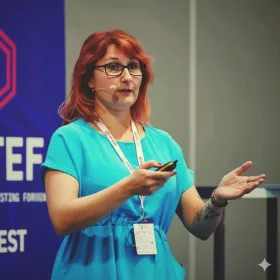
Imola
Software-testing practitioner and quality advocate with fifteen years in the field — across product teams, agencies and in-house QA orgs.
Today Imola runs Pearly Quality from Hungary: the workshops, the monthly letter, and the podcast.